I've only been doing genealogy work seriously for a couple of years. My main sources of documents for my and my husband's ancestors have been FamilySearch.org, Ancestry.com, GenealogyBank, and Fold3 (only used free trial period). I recently was able to do some on-site library research and will certainly be doing more of that in the future. Up until a few weeks ago, I was reluctant to order and pay for documents like death certificates, because I've heard stories about researchers paying for them only to find that, in their ancestor's case, it didn't provide any clues helpful for further research. (Or, even worse, the next-of-kin who filled out the death certificate provided incorrect information about the deceased's place of birth and/or parents!). Several weeks ago, I read this blog post by Judy G. Russell a.k.a. The Legal Genealogist, entitled "Ordering the SS-5." The SS-5 form is the form one uses to apply for a Social Security Number. It is filled out by the person requesting the number, or for more recent cases, by the parents of the child that the number is for. So, the information listed on this form is often (not always) first-hand information from the applicant herself! (A person must be deceased in order to obtain his/her SS-5 form.)My great-grandmother, Sofia Krupa Bodziony, immigrated to the U.S. from Poland in 1910. I was able to find her village of birth on her naturalization forms, but I did not know the names of her parents. The Catholic Diocese of Cleveland, Ohio makes it pretty difficult to obtain parish marriage records (where the parents of the bride and groom MAY be listed), but the Diocese also states on their website that parental information is often withheld (yes, even if they were married way back in 1911.) So, I decided to order my great-grandmother's SS-5 form using the online order form. The document cost $27, which I admit I sort of cringed at when I submitted my credit card information.The turn-around time on this request was pretty darn quick. A couple of weeks later I received an envelope from the Social Security Administration with a letter explaining what document they sent me AND a photocopy of the document itself. It turns out my great-grandmother filled out an IRS form to obtain a Social Security number, but the form itself contains the same information as the SS-5. (Gotta love government bureaucracy.) While she did not list the name of her ancestral village, she does list the names of her parents, 'Katherine Mourdas' and 'Joseph Krupa'. Obviously, I was more than happy when I saw the information on this form. Having these names will surely help me find family records once I am able to find/read birth and sacramental records for her ancestral village. It was money well spent, and I am thinking about ordering a couple of other SS-5 forms for two of my other great-grandparents.
A collection of photos celebrating all of the fathers, grandfathers, and great-grandfathers in our families! Enjoy! My dad with me, 1979. | My dad with my son, 2009 | My husband with his dad, mid-1990s. | My husband with his dad on our wedding day, 2004. | My father-in-law playing doctor with my son. | My father-in-law with my daughter. | My paternal grandpa with me and my brother, 1980-81 | Me with my maternal grandpa, 1979. | My son with his great-grandfather, my husband's paternal grandfather. My husband with our son, 2008. | My husband with our daughter, 2011. |
Queen Isabel la Catolica dictating her last will and testament (Eduardo Rosales, 1864) Over the past few days, my new favorite genealogy document has become the will. You know, that document you write before you die so that people know what to do with your home, land, and possessions. FamilySearch actually has a pretty decent online collection of Ohio Probate Records, and I've found many wills belonging to my husband's ancestors. (Unfortunately, the records are not recent enough to include the wills of any of MY ancestors.) And, let me tell you, just in the two days I've been looking through them, these documents have helped me solve some family tree mysteries. I'm even thinking of having a regular 'will' theme day on my blog maybe biweekly, in which I discuss individual wills and the mysteries that they helped me solve. Of course, after reading a will, you may have more questions about the family than you originally had, so wills may also put you out on the hunt again for more information (which certainly isn't a bad thing!)What can you learn from wills?- Name deceased person (testator) went by. For example, one of my husband's ancestor's was born Johann Heinrich Rolfes, but his will is signed 'Henry Rolfes.' So, now I will search for Henry Rolfes in other records and search engines because this is likely the name he used.- Residence of testator and location of any land holdings.- Sometimes date of death of testator, although I've found that it's not always directly stated. - Name of spouse, if still living.- Names of children and, sometimes, grandchildren and/or siblings of testator. This often includes daughters' and granddaughters' married names, which can be so difficult to figure out sometimes.- Residences of children and/or grandchildren. Sometimes this may just be a state (if they live in a different state from testator) OR, if they are more local, it may be an actual town.Pay attention to: - Witnesses of Will: Often extended family members, close friends, or neighbors. If you have an ancestor's will, but cannot find him in, say, a census schedule, try searching for these witnesses instead. It may lead you in a roundabout way to YOUR ancestor's whereabouts.- Date on which will was created/signed by testator. If great uncle Johnny is specifically excluded from great granddad's will, and the will was created ten years before great-grandad's death, whatever happened that angered the 'old man' happened *before* that will was created. Just a little clue if you are trying to figure out family relationship dynamics. (And, yes, I recently just found a will of one of my husband's ancestors who specifically excluded two of his sons from most of their inheritance due to "disobedience," but there was, of course, no elaboration on said disobedience.)I have seen some incredibly detailed wills in which the testator is very specific about which possessions go to which descendant, but I've also found wills that only consist of a sentence of two, in which the testator leaves all of his land/possessions to his spouse. In any case, they are definitely documents that are worth looking for in order to help you tell your family's stories.
June 8th is my Dad's birthday, so to celebrate I am posting a couple of photos from one of his childhood birthdays.
Today, June 5, is National Running Day. I thought I would 'celebrate' by posting a photo of my husband running in the Marine Corps Marathon in Washington D.C. back in October of 2002. (Wow, I can't believe that was ten years ago.) It was a great accomplishment for him; he trained for months and I was proud of him when he finished. He doesn't run too much anymore, mostly because our kids keep us more than busy. I've always been jealous of this accomplishment. Due to a medical condition in my leg, I can't run, but I feel like I would have made a good runner. But I'm very glad he was able to do it!
The gravestone of Michael and Sophie (Krupa) Bodziony, two of my paternal great-grandparents. They were born in the southern part of modern-day Poland, in a region that was once known as Galicia. They immigrated to the United States separately around 1910 and were married in 1911 in Cleveland, Ohio. They had seven children, two of which died as newborns. They are buried with two of their children, Stella and Joseph, in Cleveland's Calvary Cemetery.
Gravestone of Michael and Sophie Bodziony, Calvary Cemetery, Cleveland, Ohio
On this day 124 years ago, the city of Johnstown, Pennsylvania was destroyed by the worst flash flood in our nation's history. The flood was caused by extreme amounts of rain swelling the man-made Lake Conemaugh to epic heights, which caused its poorly-maintained earthen dam to collapse. The lake completely emptied, sending a wall of water equal to the flow of the Mississippi River down the Little Conemaugh River Valley. Several smaller towns along the way were destroyed as the flood moved downstream, during which time the water became filled with all sorts of debris: wood, metal, livestock, trees, stone. Johnstown was hit in the mid-afternoon, less than an hour after the dam broke. The devastation in Johnstown was indescribable. Over 2,200 people perished in the flood. Sixty-seven year old Clara Barton and her 'forces' arrived less than a week later to help survivors; it was the first large disaster relief campaign headed by the Red Cross.
Source: Wikimedia Commons
|
Source: Wikimedia Commons
|
Source: Wikimedia Commons
| My husband and I visited the National Park Service's Johnstown National Memorial in 2004. We attended a wedding not far from there, and, both being meteorologists, we were very interested in the event. The Memorial site is located at the site of the former Lake Conemaugh, fourteen miles upstream of Johnstown. I took several photos:Imagine this basin full of water (those railroad tracks were not there). This was Lake Conemaugh. At the time of the flood, it held approximately 20 million TONS of water. The lake was surrounded by a large clubhouse and lake houses owned by members of the South Fork Fishing and Hunting Club, a summertime haven for wealthy Pennsylvania executives and entrepreneurs, including Andrew Carnegie, Henry Clay Frick, and Andrew W. Mellon.
Part of the basin of the former Lake Conemaugh.
Here I am standing at the site of the dam. If you look across the river, you can still see where one side of the dam was situated. And here is the view downstream, through the opening where the dam used to be. I drew a red line to indicate (roughly) where the top of the dam would have been located.
Looking downstream through dam opening.
Like most National Parks sites, this one was wonderfully informative and interesting. I highly recommend visiting if you are ever in this part of Pennsylvania. Now that I do a lot of genealogy research, I find myself looking at this disaster from more of a family history perspective. Ninety-nine entire families completely perished in the disaster. Almost 100 children lost BOTH parents, and more than 320 people lost a spouse. Over seven hundred victims were never identified, but their remains are buried in Grandview Cemetery, which sits on a hill overlooking the town of Johnstown. Not only did this disaster affect the physical structures of Johnstown, but it forever altered the stories of these families. For a detailed account of the flood and its aftermath, I highly recommend reading David McCullough's book, The Johnstown Flood. I'll leave you with one more neat image I found on Wikimedia Commons. It is an 1889 stereoscope of the dam site after it collapsed (looking upstream).
Source: Wikimedia Commons
Today, May 30th, is my younger brother Mike's birthday. We are only 18 months apart in age, so Mike was my first friend and playmate. We played with Matchbox cars together, made pillow slides down the stairs, threw toys down the laundry chute, jumped on our parents' bed, rolled around in appliance boxes in the basement, and played video games together on our Atari 2600 and (later) the original Nintendo Entertainment System. We played checkers on this big blanket-sized checkerboard with checkers the size of our hands. We were also fans of board games like The Game of Life, Clue, and Midnight Party. We listened to Michael Jackson, The Cars, and Huey Lewis and the News cassette tapes on our mom's tape player that she kept in the kitchen.
Mike as a newborn.
|
Mike with our Grandpa Kowalski
|
The obligatory "Let's put the baby on the toddler's lap" photo.
|
Waving 'hello!'
|
Tummy time!
|
Out for a stroll.
|
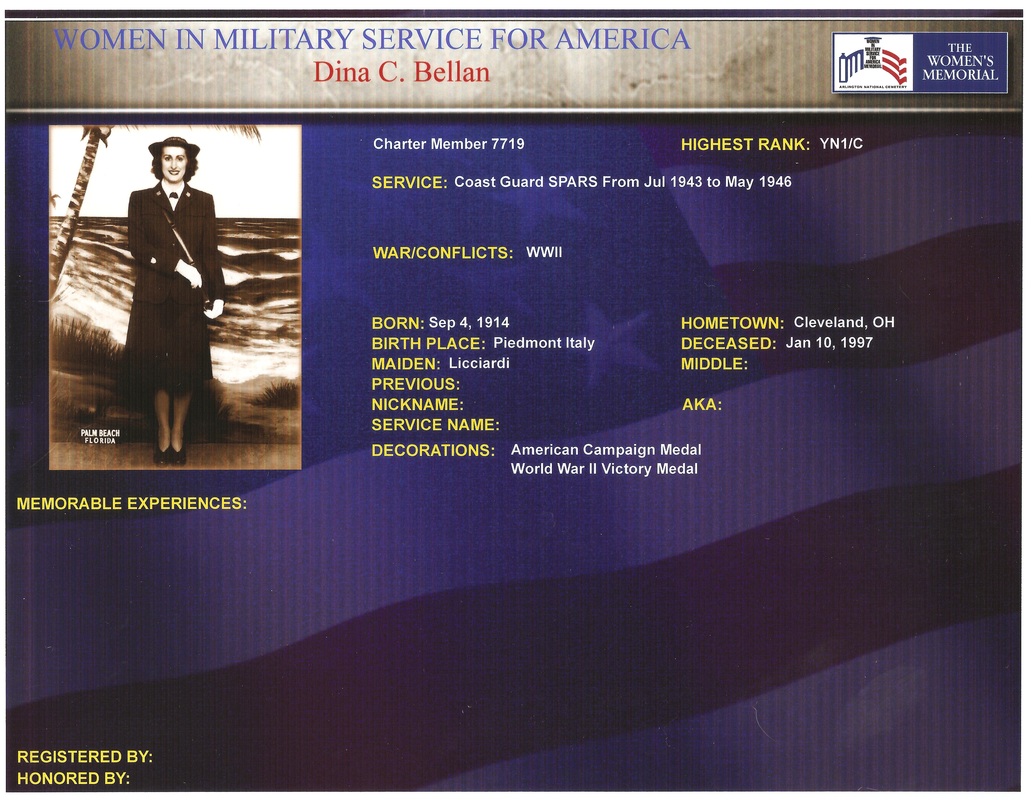
My Great Aunt Yola (left) and my Grandmother Dina Licciardi (right) as young girls, probably around 1922-1924.
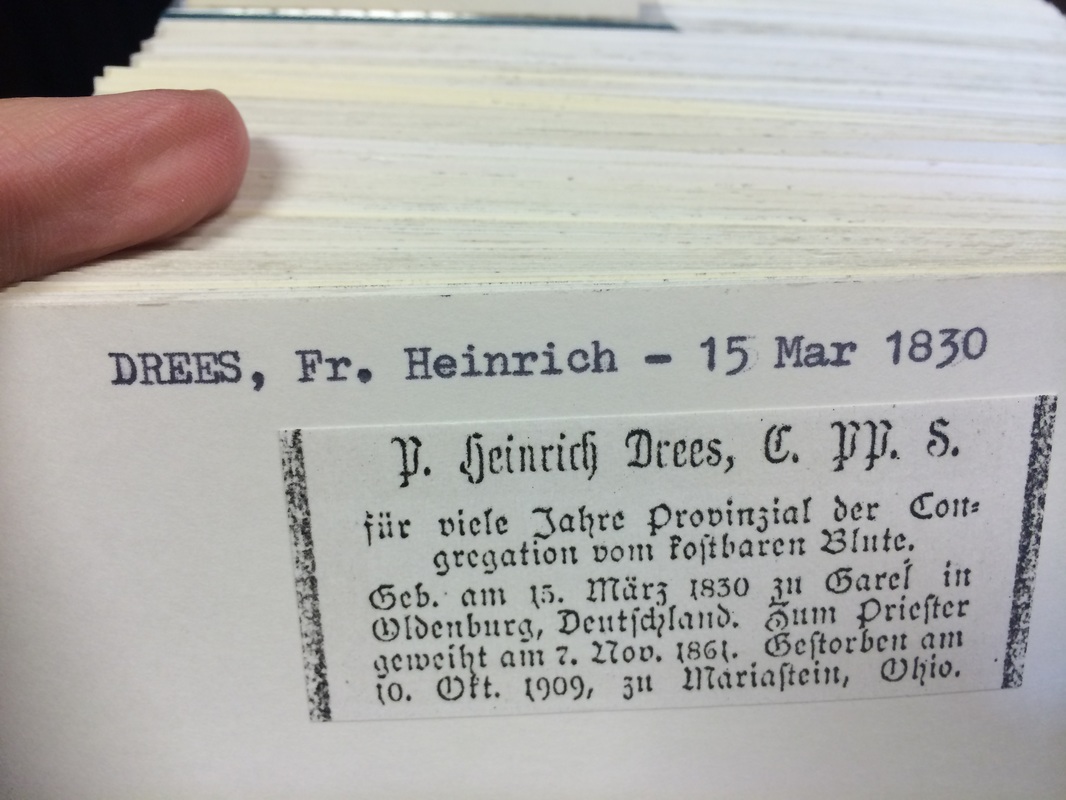
Over the past week or so, I have been (slowly) researching one of my husband's distant uncles, Henry Drees, who was a Catholic priest in Ohio during the late 19th and very early 20th centuries. I have been using various Catholic directories on Google Books to trace his career and places of residence between census schedules. Wikipedia does a nice summary of the evolution of Catholic Directory publishing in the 19th century. What makes these directories so helpful? The directories, usually published annually, provides a listing of every Catholic-run church, hospital, school, college, orphanage, asylum, convent, seminary, and missionary in the United States. And, actually, many of the directories that include the U.S. also include British North America as well. This one, from 1876, includes a listing of clergy from Ireland, too: Each diocese/archdiocese is given its own sub-section; within the city proper, the parishes are listed alphabetically by name (left). Then, every smaller town in that diocese that has a Catholic church is listed alphabetically (right). If the church has full-time pastor and assistants, their names are listed. Some of these directories will provide a church's "ethnicity," if its services were typically conducted in a language other than English or if the majority of its parishioners were of a particular nationality.
Sadlier's Catholic Directory, 1891, | Sadlier's Catholic Directory, 1891. | Obviously, if you have relatives who were Catholic priests, these directories are wonderful for figuring out which institutions they served at and when. As I mentioned above, these directories also list Catholic schools and hospitals, which were often run by women's religious orders. The directories DO list the names of the women in charge of these institutions, BUT many women serving in Catholic religious orders adopt new religious names once they take their final vows. So, unless you know the name your relative took at the time of her vows, you might not be able to find her if she is listed, say, as Mother Superior of a convent.The directories also have an obituary section in which the deaths of priests and other female and male religious members that occurred over the past year are listed. Typically, due to space constraints, not much information is listed: Date, name, location, age, order - SOMETIMES place of birth and cause of death are listed, but not always. The bonus in the obituaries is that women religious often have their birth names listed next to their religious names and titles.Even if you do not have ancestors who were priests or other Catholic religious members, you may find these directories helpful. Perhaps you know your relatives were Catholic and you know the town in which they settled. Use these directories to figure out what church they attended (and then try to track down those sacrament records!). Perhaps you don't know where your Polish Catholic immigrant great-grandparents attended church in a bigger city, like Cleveland. Use these directories to figure out where the Polish Catholic churches were located and start researching those churches first. Remember that Catholic churches and schools are not static entities; new ones open, old ones close and merge with other parishes. These directories give us a snapshot of which parishes and schools were open and active every year in just about every location in the country. I was pleasantly surprised to see how many Catholic directories from the 19th and early 20th centuries can be viewed and downloaded for free through Google Books. Simply go to Google Books and type "catholic directories" in the search box. You will be able to browse through them and, if you are looking for a specific year or range of years, you can narrow down your search even further.
|